Technical SEO

SEO Keyword Analysis Tips – The Short, Medium & Long Tail

Keyword analysis is an essential part of any search engine optimisation (SEO) campaign. This research stage is integral to the overall completion of objectives that have been set out for the campaign and for achieving an effective SEO strategy. Keyword analysis looks into which types of different keywords will be chosen to optimise for your website, how competitive they are, and how much extra traffic they could potentially bring in.

Step 1: Keyword Brainstorming

The first step toward beginning any keyword analysis is to brainstorm some general terms or areas in which you would like to drive traffic for your business. The best way to start this would be to identify the areas of your business which you would like to bring visitors in through. For example, if one of our business services was selling life insurance, then we could use this as a starting point to then build some SEO keywords from.

How to Correctly Cloak your Affiliate Links – Featuring Matt Cutts

Link Cloaking Correctly

When going about link cloaking, there’s 2 separate ways: The right way, and the wrong way – we’ve seen numerous websites try and hide their dodgy little backlinks whilst selling them for a small fortune, but we’ve come up with the perfect solution, or should I say solutions?

Solution #1:

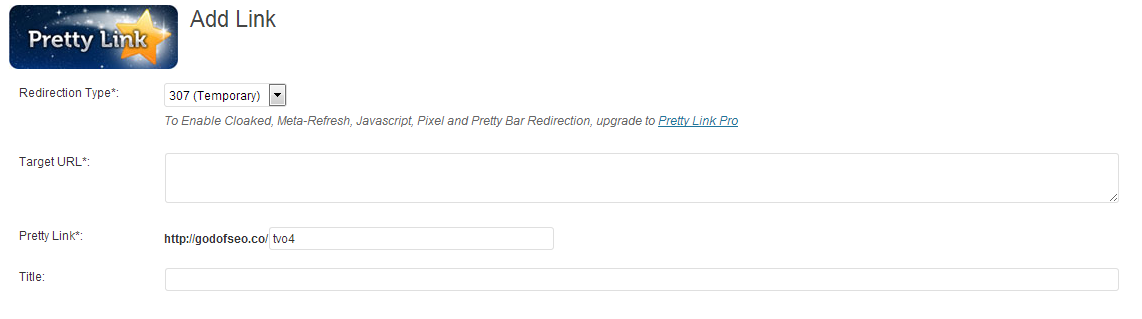
If you’re looking to implement an affiliate link within your site that you don’t particularly want Google to see… Use a 307 temporary re-direct from your site. If you’re doing all this in a WordPress site, then you can get a plugin called “Pretty Link” – It’s an easy to manage tool for re-direct link management.

pretty link dashboard

Add Breadcrumb Links to your Blog’s SERP Snippet – A Quick Guide

Rich snippets within the search results can help to increase click-through rates and also make users aware of other content from your website. We have heard loads over the past year or so about Google+ authorship within your search engine snippet, but one extra feature that I rarely hear mentioned is the use of breadcrumb navigation links.

SERP snippet with breadcrumb navigation links

In the image above you can see an article that I recently wrote appear in the SERPs. I have highlighted the breadcrumb link that goes to the Technical SEO category section of the Wow Internet blog. This can be really handy toward getting more of your content in front of users and also makes for a better user experience in general. To actually implement this into your SERP snippet couldn’t be easier!

SERP Rank Tracking Tools and Expert Opinions

As an SEO, it is a critical part of my job to show clients how their SEO campaigns are performing. More times than not, the performance of these campaigns is judged pretty much solely on the positions of keywords in the SERPs that I am targeting for the client’s website. Many SEOs will argue that search engine rankings are not the be-all-and-end-all of an SEO campaign and that they are actually becoming less relevant altogether. I hold this very opinion and this is mainly down to the increased appearance of blended search results (i.e. search results containing news snippets, images, videos, shopping snippets, etc). Even though this is the case, the fact of the matter is that clients want tangible results; results that they can see business from.

I’ve put together, with the assistance of my SEO sidekick, Liam McCarthy (he’s going to hate me calling him that!), a list of some of the different tools, both paid and free, that we have used in the past to check keyword positions in the SERPs. I will also be explaining some good ways in which you can gain a more accurate representation of the performance of your search engine campaign. On top of this, I have called in the help of Dan Petrovic from Dejan SEO, Simon Penson of Zazzle Media and Magnus Simonarson of ConsultWebs.com to share their thoughts on the topic. Thanks guys!

3 Great Website Architecture Tools for SEO

A solid website architecture is one of the most important factors toward enabling the search engine bots to crawl your content correctly. Site architecture comprises of how the different pages on a site are structured, linked together and the content that the pages comprise of. At the most basic level, your website should have a structure that allows the search engines to effectively access the different webpages on the site in order to consume the content within them.

I have talked a lot about the necessity of effective on-page optimisation recently and ineffective website architecture is a problem that I come across all too often. With this in mind I have decided to share some of my favourite tools that help identify site architectural problems. Some of the tools are free and some are paid for, so you can decide which ones are relevant to you and make the most of them.

Xenu Link Sleuth

This free crawler tool is one of my personal favourites. Xenu Link Sleuth allows you crawl your website and find a whole host of issues. The software is ran off your desktop, so you need to install it on your computer and is really quick at carrying out its’ tasks. Here’s what you can do with Xenu Link Sleuth:

On-Page Optimisation with a View to the Off-Page

On-page SEO is a topic that is widely discussed and it seems that everyone has differing opinions upon what works and what doesn’t. I thought that I would share my experience from the SEO campaigns that I have worked on and found success with. As well as this, I have combined the comments of industry experts to provide you, my lovely reader, with a guide to the best practises of on-page optimisation.

Ever since the introduction of Google+ it seems that Google have went crazy over social signals. Facebook ‘Likes’, ‘Tweets’ and ‘+1s’ all play a huge part toward your website’s search ranking so it would be foolish not to take this into account when doing the on-page work. What I mean by this is that you need your website to be ‘social ready’ in order to encourage or at bear minimum, enable the user to share your content. This, amongst many other factors plays a huge part toward the success of your SEO campaign.

What is the Best Way to Optimise a Web Page?

This is a question that is asked again and again by anyone looking to get their website ranking well within the search engines. The answer to this question, however, is always changing due to the consistent evolution of search engines and the algorithms that they use to ‘rank’ webpages. Not only this but we have to take into account many external factors that have an effect on a website that in the past we would have not considered as part of the on-page SEO process. For example, the different markup languages that have an effect on how our webpages are displayed when they are shared on social sites or simply how they appear in the SERPs.

I must mention Rand Fishkin’s article on ‘the perfectly optimised page‘ back in 2009 which looked at the best way to perform your on-page work at the time. This article now looks to follow on from a lot of the points that Rand made with some new factors that need to be took into account.